Epidemiology
Etiology
- Risk Factors (High-Yield)
- Prior ectopic pregnancy (strongest risk factor)
- Pelvic Inflammatory Disease (PID): Causes tubal scarring (esp. from Chlamydia trachomatis)
- History of tubal surgery (e.g., tubal ligation)
- Infertility and use of assisted reproductive technology (e.g., IVF)
- Intrauterine device (IUD) in situ (prevents uterine implantation but not ectopic)
- Smoking
Pathophysiology
Clinical features
- Lower abdominal pain and guarding (ectopic pregnancy is often mistaken for appendicitis due to the similarity of symptoms)
- Possibly, vaginal bleeding
- Signs of pregnancy
- Amenorrhea
- Nausea
- Breast tenderness
- Frequent urination
- Tenderness in the area of the ectopic pregnancy
- Cervical motion tenderness, closed cervix
- Enlarged uterus
Diagnostics
- ↑ β-hCG
- Transvaginal ultrasound (TVUS)
- Indication: best initial imaging test for determining the location of the pregnancy
- Supportive findings
- Empty uterine cavity in combination with a thickened endometrial lining
- Additional findings in tubal pregnancy
- Possible extraovarian adnexal mass
- Tubal ring sign (blob sign): an echogenic ring that surrounds an unruptured ectopic pregnancy
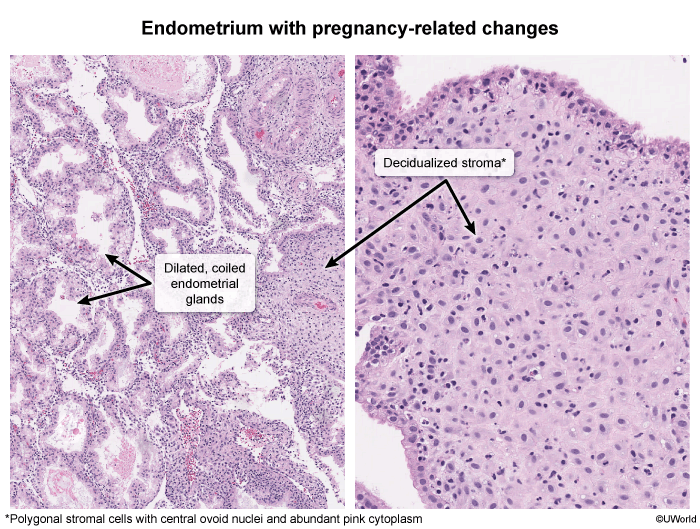
- Endometrial biopsy
- Mainly affected by hCG induced progesterone
Treatment